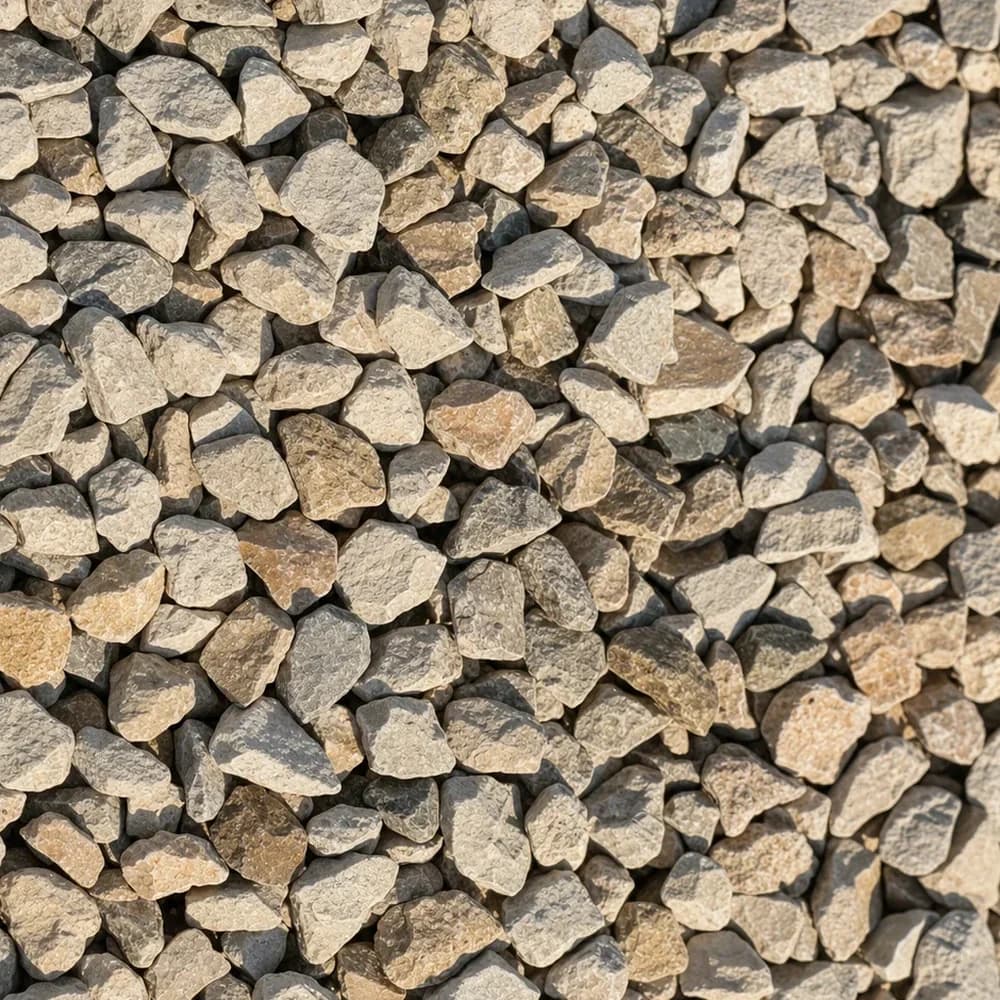
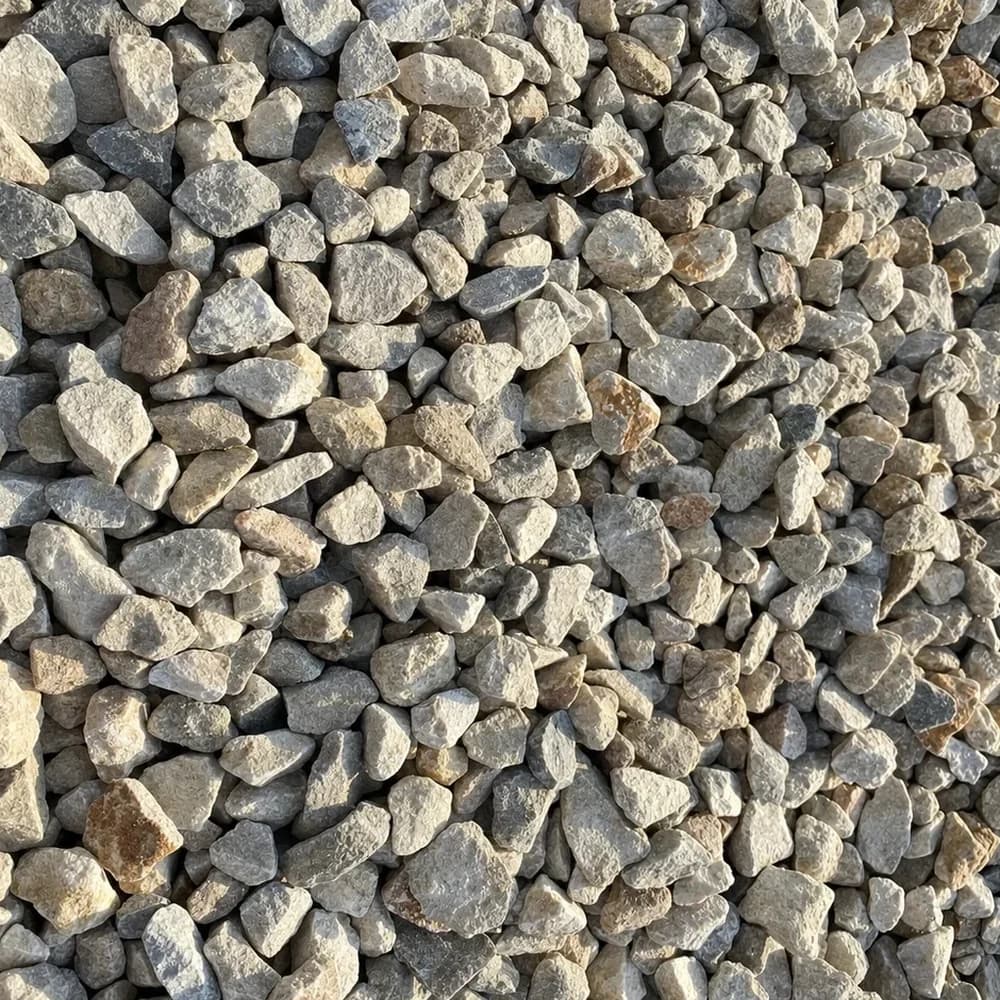
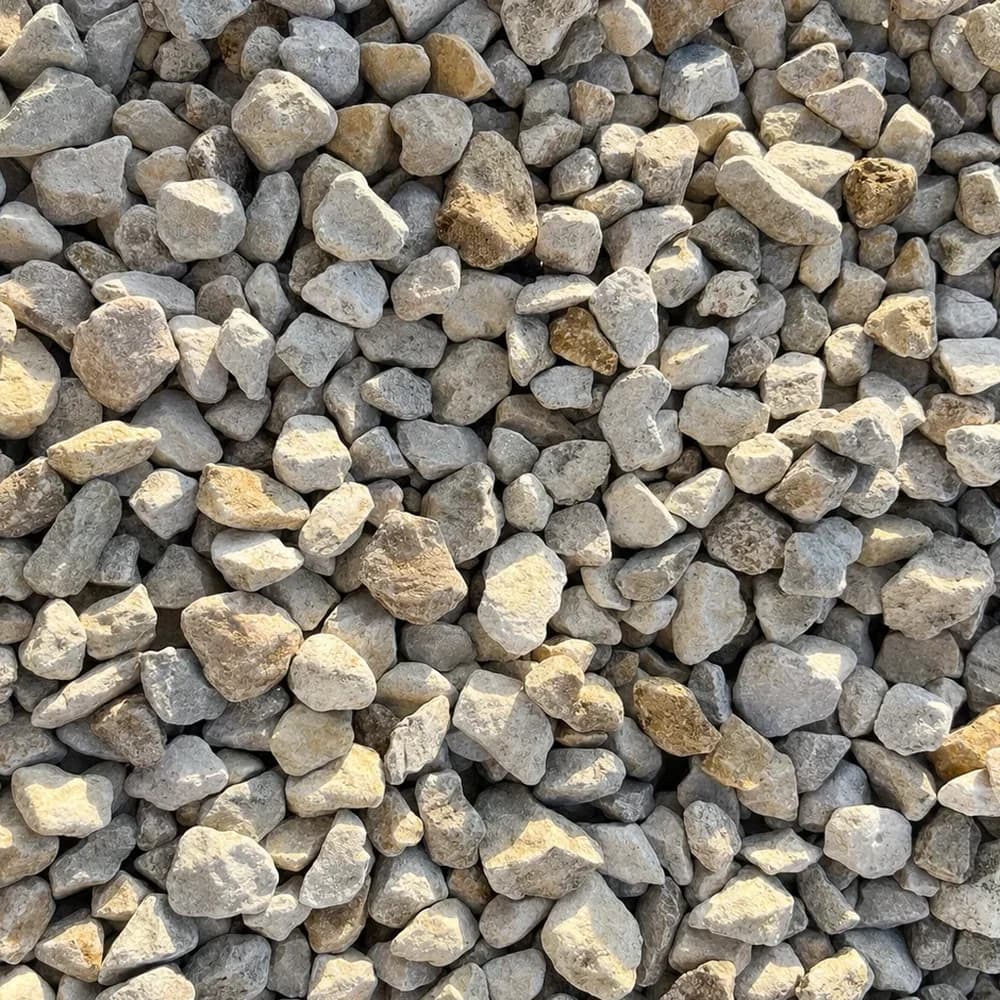
#67 Stone: The Finer Drainage Grade for New York Trenches
Lake-effect moisture can leave New York project areas saturated, while deep frost affects work across much of the state. #67 Stone supports drainage and concrete work.
- Size: 1/4 inch to 3/4 inch
- Grading: #67
- Type: Angular crushed stone
From $451 for 1 ton, delivery included (larger loads cost significantly less per ton)
Free delivery included
Free delivery anywhere in New York
Pick a delivery date
Weekday delivery, earliest Oct 30
“Grabbed a load of stone from them and everything went smooth. Driver was friendly and careful about where he placed it, which I really appreciated.”
Brian M. · Verified Buyer
Get a Free Quote
Fill out the form and our sales team will get back to you within the hour.
Size and Grading
- Size
- 1/4 inch to 3/4 inch
- Grading
- #67
- Type
- Angular crushed stone
Half the orders for #67 stone start as an argument with a neighboring grade. On flat Mohawk Valley ground where a lateral has to sit in a shallow trench and the lawn above it stays soggy into May, the shortlist is this grade or #57 Stone, and the difference between them is smaller than the number suggests. Both are angular crushed stone. Both drain. This one runs a quarter inch to three quarters of an inch, which puts its whole range below the top size of the coarser grade, and that shift downward is why it gets picked for tight work.
Bedding a lateral with #67 stone under a wet lawn
Pipe bedding and backfill is the job this grade earns most of its deliveries from. A water line, a sewer lateral or a run of perforated drain pipe needs even support along its whole length, not contact at three high points with gaps between them. Smaller, evenly graded pieces settle around the barrel of a pipe and under its haunches, which is where support actually matters, and they keep enough open space between them for water to leave the trench.
French drains and infiltration trenches are the next use along. So is stormwater work where a trench has to accept surface water and hold it while the ground takes it in. Used where it can be seen, the angular pieces give a bed edge or a tree ring a defined, uniform look rather than the loose scatter of a rounded stone.
The other half of the material's working life is inside a concrete mix, where the smaller top size makes a mix that places and finishes cleanly and leaves a finer face on exposed and decorative work.
Shallow trenches on flat lake-plain ground
New York gives this grade plenty of work because so much of the state drains badly. The flat clay and silt plains inland from Lake Ontario and Lake Erie hold water at the surface after every melt. The valley floors of the Hudson and the Mohawk were left by an old glacial lake and behave the same way. On upland ground in the Southern Tier and the Finger Lakes hills, a dense subsoil layer keeps rain sitting near the top of the profile.
On that ground a trench often cannot be deep, because a few feet down is the material the water will not pass through anyway. What a shallow trench needs is a stone that makes the most of the volume available, and a smaller consistent grade packs more usable void into a narrow, shallow section than a coarse stone whose pieces bridge against the trench walls.
Frost runs to roughly four feet across most of the state, so a drain built to keep water away from a foundation is also a drain that has to survive a season of freezing and thawing. Voids that stay clear keep working; voids that silt up do not, which is why what goes around the stone matters as much as the stone.
Getting stone under a pipe without floating it
Cut the trench, then put stone in before the pipe rather than laying pipe on the trench bottom. A bedding layer of two to four inches under the barrel is what lets you set the pipe to a consistent fall instead of following whatever the excavator bucket left.
Wrap the trench in filter fabric on clay, silt or any ground with fines that can move. Lap it up both walls and fold it over the top of the stone before backfill goes on. Fines are what close the voids, and once they are in, no amount of extra stone fixes it.
Shovel stone down both sides evenly and work it under the haunches with a bar, keeping the layers level so the pipe does not lift or wander off line. Then bring the backfill up over the crown, six inches of cover at least before anything heavier than a boot crosses it.
#57 Stone and the 3/8 inch chips on either side of it
The coarser neighbor, #57 Stone, tops out about an inch. It carries a foot or a wheel better, moves more water per foot of trench and is the usual pick for a deep French drain or a stone layer under a pad. Choose it when the trench is generous and the load above is real.
Going the other way, 3/8" Crushed Stone is finer again. It suits a narrow trench, a shallow drain under a path, or a topping layer over compacted base where a coarse stone would roll underfoot. Between those two, #67 is the middle choice, and on a site with one delivery and several jobs it is often the grade that does all of them acceptably rather than any of them perfectly.
Counting stone for a lane cross-drain and a garden path
Hypothetical jobs, with the arithmetic laid out.
Cross-drain under a rural lane, 1.5 ft wide by 30 ft, 12 in deep
- 1.5 x 30 = 45 sq ft
- 45 x 12 / 12 = 45 cu ft
- 45 / 27 = 1.67 cu yd
Foundation drain ahead of a new lawn, 1 ft wide by 100 ft, 18 in deep
- 1 x 100 = 100 sq ft
- 100 x 18 / 12 = 150 cu ft
- 150 / 27 = 5.56 cu yd
Garden path, 3 ft wide by 40 ft, 2 in
- 3 x 40 = 120 sq ft
- 120 x 2 / 12 = 20 cu ft
- 20 / 27 = 0.74 cu yd
Total 7.97 cubic yards. A 4 inch pipe along that 100 foot run displaces roughly 0.3 of a cubic yard, which is inside the rounding, so ignore it and order the full figure. At about 2,800 pounds per cubic yard, near 1.40 tons per yard on this site's published stone weights, 7.97 yards is about 11.2 tons. Call it 11. Treat the weight as approximate. The stone calculator will run the same areas and give you the tonnage directly.
When the number is settled, set the quantity and a date on the product page, or send your trench dimensions through the contact page and have the figure checked first. Delivery is arranged at checkout by ZIP code, and the driver needs clear access to a firm place to tip.
Quickly Calculate How Much You Need
Material: #67 Stone
How to Measure
Measure the length and width of your project area in feet
Decide on depth in inches (2" for landscaping, 4" for driveways)
Enter the values above and we'll calculate the tonnage you need
Need help figuring out the right amount? We can help!
Call or text us at (516) 914-4265 and we'll help you calculate the right quantity for your project.
Not sure how much you need? The Stone Calculator has depth guides, coverage charts and worked examples for this material.
Frequently Asked Questions About #67 Stone
Customer Reviews
Decided on stone from them and it showed up right when I needed it. Really happy with the order, I'd definitely use them again and recommend them.
Karen F. · Buffalo, NY · Verified Buyer
Decided on stone from them and the ordering was easy from start to finish. The stone was great quality, really happy with how it turned out.
Hank D. · Syracuse, NY · Verified Buyer
Grabbed a load of stone from them and everything went smooth. Driver was friendly and careful about where he placed it, which I really appreciated.
Brian M. · Buffalo, NY · Verified Buyer
Needed stone for a project and the team made it really easy from start to finish. They kept me updated the whole time, delivery went smoothly, and I'm really happy with how it all turned out.
Gina J. · New York City, NY · Verified Buyer
#67 Stone has 4 verified customer reviews with an average rating of 5 out of 5.