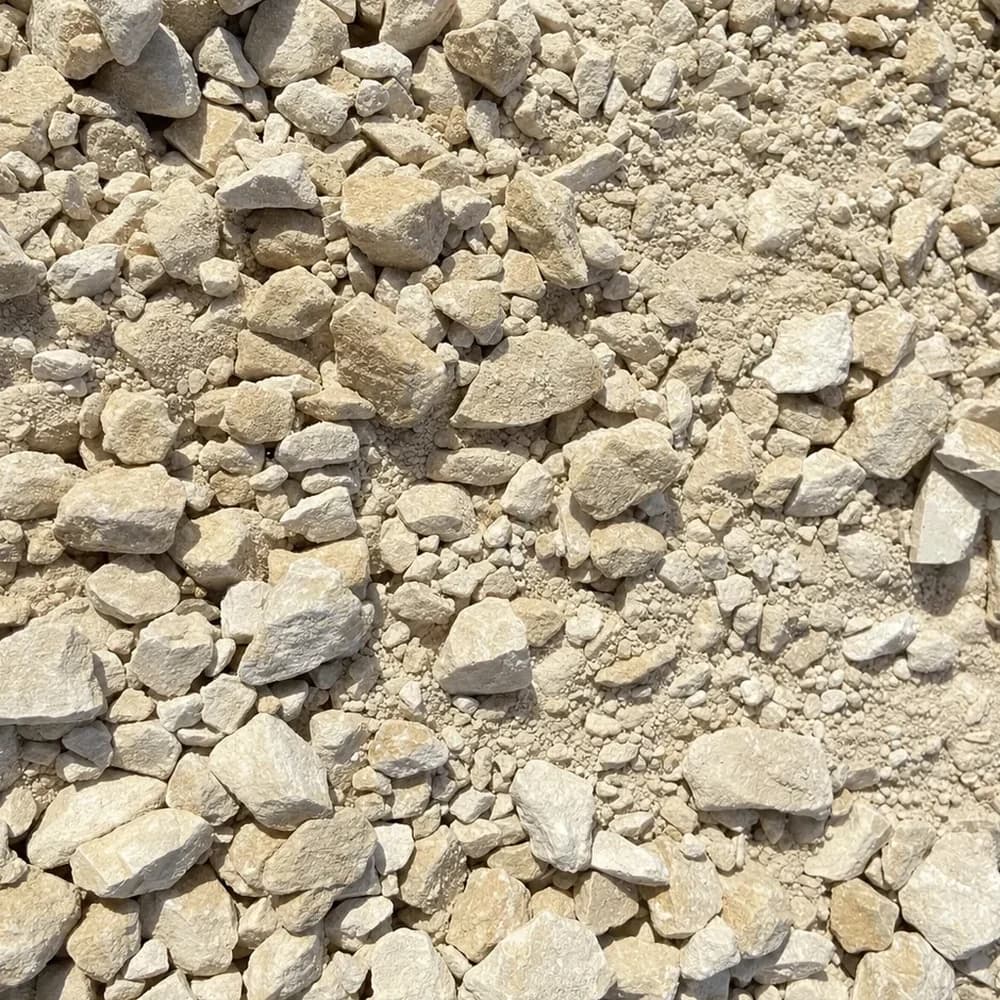
Crusher Run and Item 4, Figured by the Compacted Inch
Enter your project dimensions
Walk the lane before you measure it. The ruts that open along a Mohawk Valley farm track when the frost comes out are never evenly deep, the soft patch by the barn doors goes further down than it looks from the house, and the crown you think is still there washed off two springs ago. A calculator will turn whatever numbers you feed it into tons to two decimal places. Only the walk decides whether those numbers describe the lane.
What the tape misses on a rutted upstate track
An estimate is only as good as the depth behind it, and depth is the number people guess. Three things throw it off on New York ground. Ruts and wheel tracks hold more material than the same lane measured flat, so pace the length and take a depth reading every ten or fifteen feet rather than one in the middle. Silt and clay valley floors along the Hudson and the Mohawk stay soft into spring, and the first load pushed down into soft subgrade never comes back up. And the number that counts is the finished rolled thickness, not the loose depth you spread, because a graded mix tightens under a plate compactor.
That last point is the one that costs people a second delivery. Enter the compacted depth you want to finish at, then let the 10% tick box cover spillage and tightening.
Three thousand pounds a yard, and why that is the heavy end
This site publishes crusher run and Item 4 at about 3,000 lb per cubic yard, which is 1.50 tons per yard. That is the heaviest of the drive materials in the catalogue: clean washed stone and driveway gravel run about 2,800 lb, or 1.40 tons per yard. The fines are the reason. A graded mix carries its own dust, the dust fills the gaps between the stones, and a yard of it weighs more than a yard of anything washed and screened.
Item 4 is the New York trade name for that material, and yards here use both names for the same kind of thing. NYSDOT specifies subbase under Section 304, which is how material gets described locally rather than anything this storefront certifies. On the calculator, pick the crusher run or road base row either way, and use the road base calculator if Item 4 is the name on your drawing, since that is the name that has to match your ticket.
Putting a lane and its turnaround into the multiple-areas box
Choose rectangle for a lane, circle for a turnaround measured straight across, or multiple areas to total up to five separate pieces in one pass. Lengths, widths and diameters go in feet. Depth goes in inches, anywhere from 0.25 to 24. Pick the material, because the ton figure follows it, and leave the 10% extra for compaction and spillage ticked on anything you will roll. The result comes back as cubic yards, tons and cubic feet together, and a button sends the estimate to your inbox.
Compacted depths for lanes, shed pads and a patio base
| Job | Compacted depth | Note for New York ground |
|---|---|---|
| Walkway or patio base | 4 in | Under pavers, placed in two lifts |
| Driveway or farm lane | 4-6 in | Take the 6 on lake-plain clay and valley silt |
| Trucks and equipment | 6-8 in | Deliveries, trailers, a turning tractor |
| Shed or hot tub pad | 4 in over stripped ground, 6 on soft | Strip the sod first |
Two hypothetical jobs, with the arithmetic shown.
A 90 by 10 ft lane running up to a Capital Region barn, finished at 5 inches:
- 90 x 10 = 900 sq ft
- 900 x 5 / 12 = 375 cu ft
- 375 / 27 = 13.89 cu yd
- 13.89 x 1.50 = 20.83 tons
- with the 10% box ticked: 15.28 cu yd, 22.91 tons
A 12 by 12 ft shed pad at 4 inches over stripped ground:
- 12 x 12 = 144 sq ft
- 144 x 4 / 12 = 48 cu ft
- 48 / 27 = 1.78 cu yd
- 1.78 x 1.50 = 2.67 tons
- with the 10% box: 1.96 cu yd, 2.94 tons
One place this material does not belong is a trench meant to move water. The fines that make it bind also hold water, so a French drain wants clean stone: drain rock or 3/4 inch crushed stone, sized on the gravel calculator.
If pavers are going over the top instead, size that layer on the paver base calculator, which carries the base past the paving edge and stacks the bedding and the paver thickness above it.
Ordering a little long before the plate compactor arrives
Round up to the next half ton. A shortfall on a base course is worse than a heap left over, because the layer has to be placed and rolled in one session to finish level, and a wheelbarrow of leftovers patches the first pothole that opens. Place it in 2-inch lifts and roll each one, misting lightly first, since damp material locks up tighter than dry.
The season sets the rest. Base work here runs from the spring thaw into late fall. Frozen ground will not compact, and a base rolled onto saturated clay in March will move once the ground dries out.
Two names, one product page
Take the tonnage across to Crusher Run or Item 4, set the quantity and choose a delivery date. Delivery is arranged at checkout by ZIP code, and the truck needs a clear route and a firm spot to tip; what the driver needs on the day sets out the rest. If the same job needs a top course, size that separately and order both together so they arrive on one load.
Common questions
The lane came up 2 tons short. Do I spread what arrived and bring the rest next week?
You can, but the base will not finish as well. Crusher run is placed and rolled in lifts, and a patch rolled a week later never keys into the layer beside it as tightly. Round the order up to the next half ton instead, and keep the surplus for the ruts that open next spring.
I took one depth reading in the middle of the lane. Is that the number to type in?
The arithmetic is exact. The subgrade is not. Uneven ruts, a soft spot swallowing the first bucket and a depth guessed rather than measured all move the real figure, almost always upward. Take depth readings in several places, use the average, and leave the 10% ticked.
The result gives me yards and tons. Which one goes in the quantity box?
Tons. Crusher run and Item 4 are sold here by the ton, so that is the figure the product page wants. The cubic yard figure is there to picture the volume: a yard is a cube three feet on a side, and at 4 inches deep it spreads over about 81 square feet.
Where should the driver put 22 tons?
Pick the spot before you order. That much material makes a pile you cannot shift far by hand, so put it at the end of the lane furthest from where you will start spreading, on firm ground rather than soft lawn, and leave the truck a straight run in and out. Tipping onto a tarp saves scraping fines off a new apron.
The drawing says Item 4 and the yard ticket says crusher run. Which page do I set the tons on?
Either the crusher run page or the Item 4 page, whichever name you have been using. Both are the same kind of graded mix with fines, and both convert at 1.50 tons per cubic yard on this site.
Related calculators
Base tonnage sorted? Good.
Crusher run by the ton, the cheapest structure on the yard, delivered free.