Crusher Run or Item 4: Picking the Base for a New York Pad
Also known as: run of crusher, RCA
Crusher Run goes under a New York driveway or patio surface, creating a dense base for ground exposed to frost movement.
- Size: 3/4 inch minus
- Grading: Crushed stone blended with stone dust and fine particles
- Type: Angular crushed stone
From $384 for 1 ton, delivery included (larger loads cost significantly less per ton)
Free delivery included
Free delivery anywhere in New York
Pick a delivery date
Weekday delivery, earliest Oct 30
“Went with these guys for Crusher Run, they kept me updated the whole time and the price was fair for what I got.”
Carlos F. · Verified Buyer
Get a Free Quote
Fill out the form and our sales team will get back to you within the hour.
Size and Grading
- Size
- 3/4 inch minus
- Grading
- Crushed stone blended with stone dust and fine particles
- Type
- Angular crushed stone
Most people land here mid-decision, with a pad or a drive that has to be built before the ground closes up for the winter and two names on the shortlist. Crusher run and Item 4 do the same job in New York, and many yards here sell them as the same kind of material. Crusher run is 3/4 inch minus, angular crushed stone blended with stone dust and fine particles. Item 4 runs a size coarser at 1 inch minus. If the lift is shallow, or the surface has to be screeded flat, the smaller top size is easier to work. If the pad is deep and carries weight, the coarser mix gives the layer more to key against.
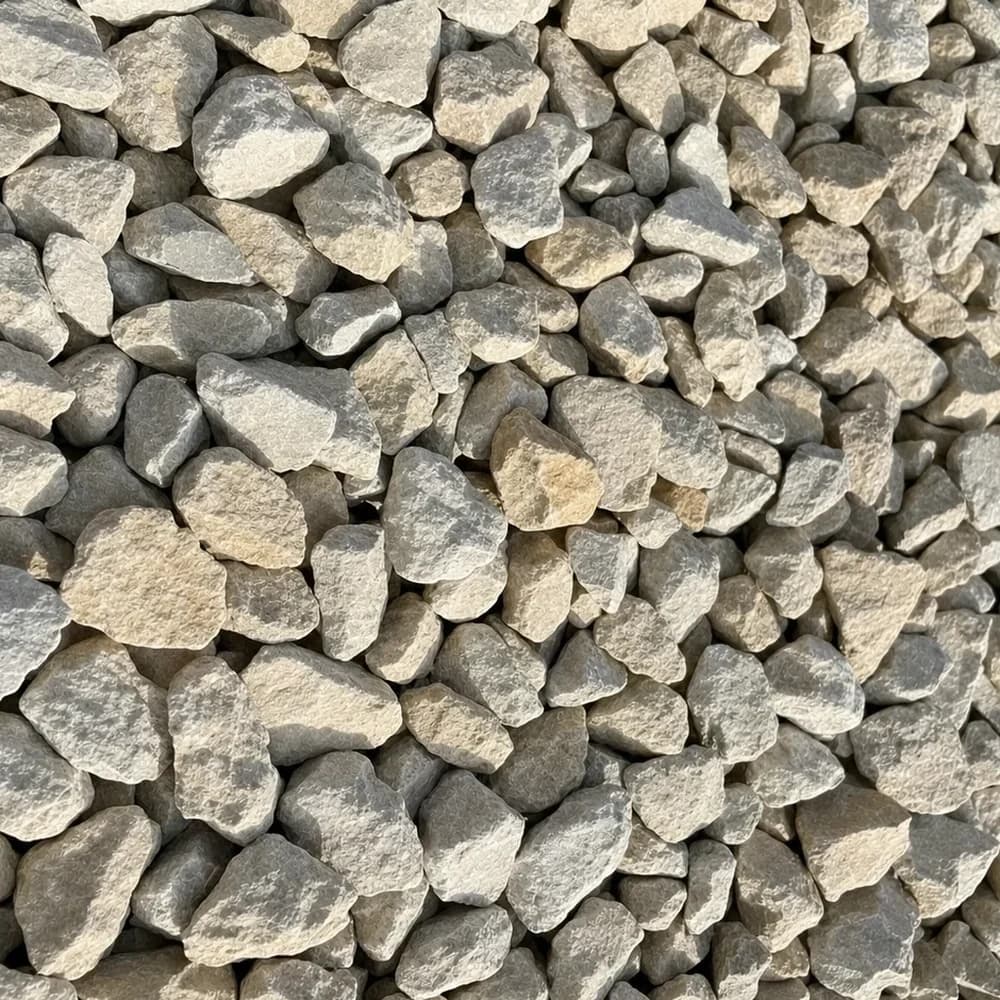
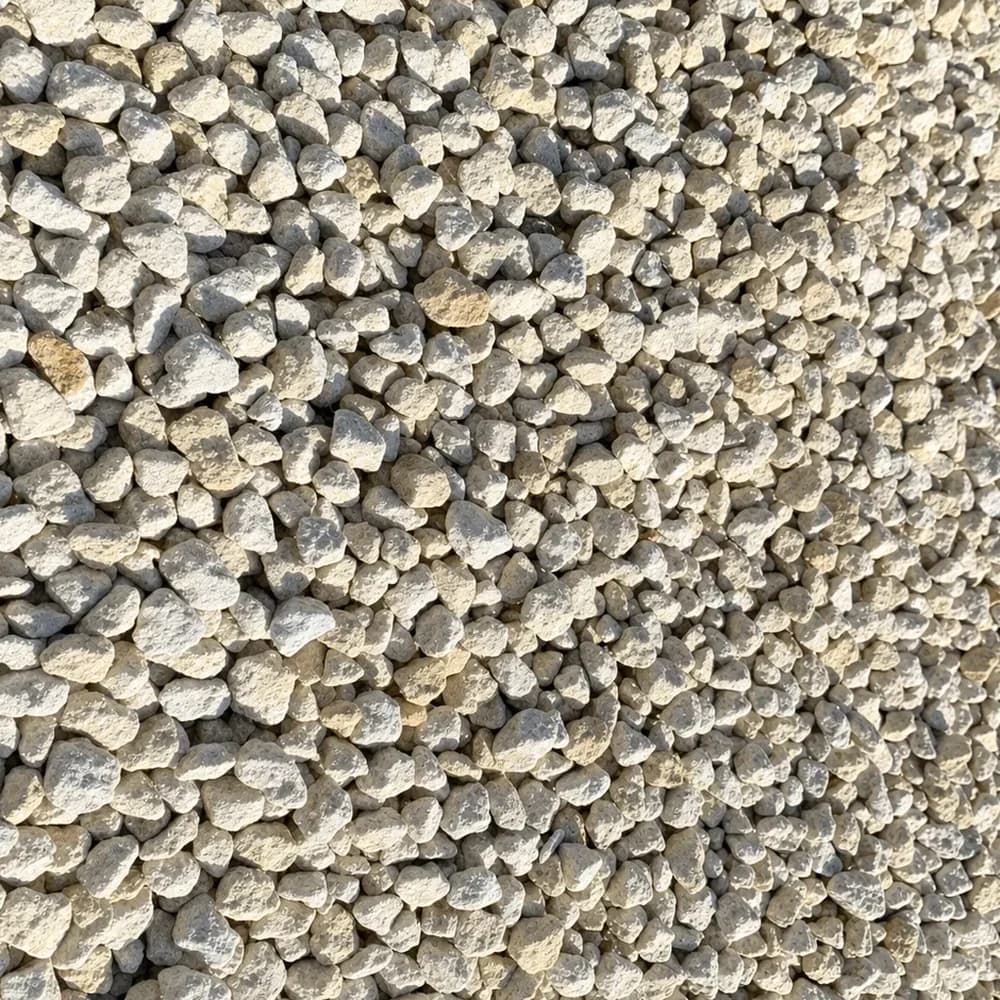
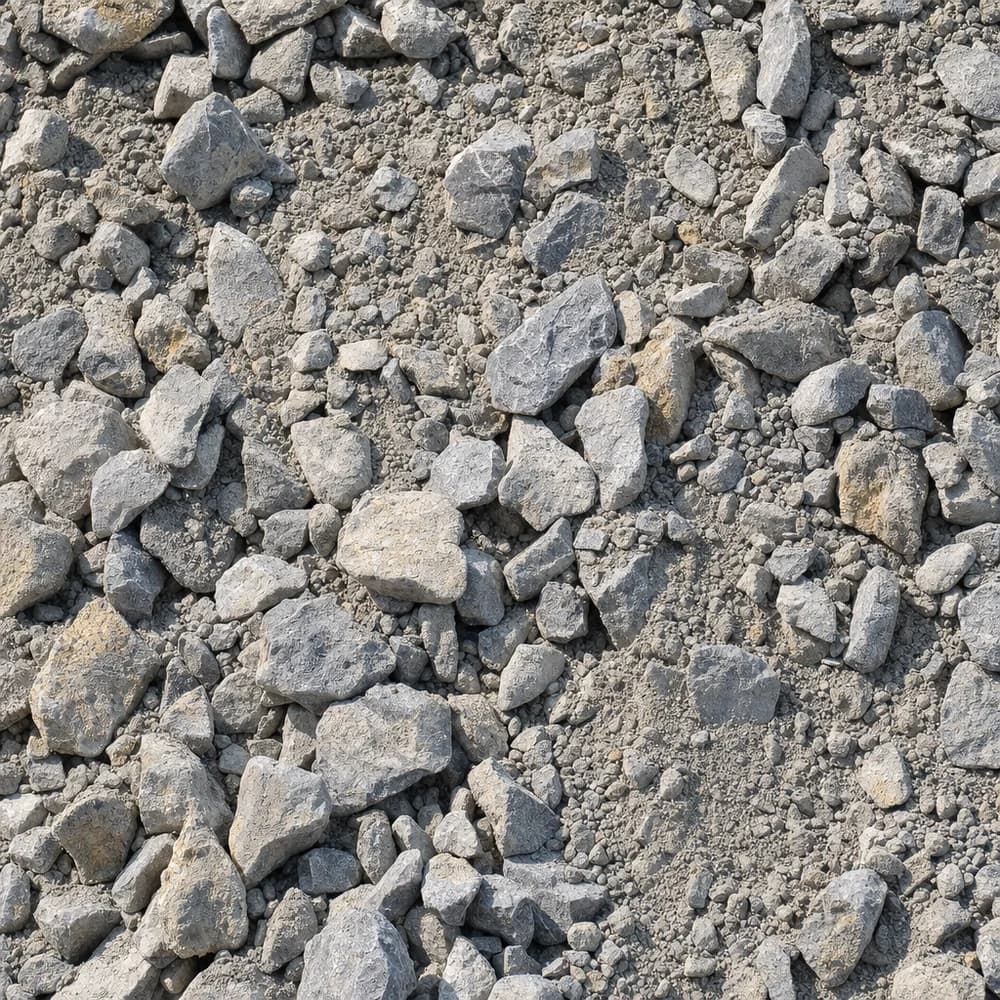
Gray, angular and dusty: what crusher run looks like in the pile
Tip a load out and it does not look like a clean stone. The pieces are sharp-edged rather than rounded, they run from three-quarters of an inch down, and the gaps between them are packed with dust and grit. That dust is the whole point. Squeeze a damp handful and it holds its shape for a moment before falling apart. Dry, it will not.
Color depends on the rock it was crushed from, and across New York that varies: gray limestone, darker traprock, the harder crystalline stone of the Adirondack region. None of that changes how the material behaves. What matters is that the fines are still in the mix, because they are what fill the voids and let the whole layer lock up under a plate compactor.
Stone dust on its own, and a washed stone like #57, sit either side of it. Stone dust is all fines and no structure. A washed stone is all structure and no fines, so water drops straight through and the stones stay loose. Crusher run is the middle case.
Pads that carry weight on lake-plain clay and glacial till
Anywhere a load sits still for months, crusher run earns its place. An RV or boat parking pad is the clearest case: a trailer tongue jack concentrates a lot of weight on a small footprint, and a compacted base spreads that across the subgrade instead of letting it punch through. Same for shed and gazebo pads, hot tub platforms and the apron in front of a garage door.
It is also the layer under hardscape. Pavers and flagstone need something beneath them that does not move when the ground freezes and thaws, which on the flat glacial-lake silts around Lake Ontario and the clay valley floors of the Hudson and Mohawk happens hard and often.
For site work, crusher run fills and levels a low area so equipment has somewhere firm to stand. Upstate that matters most in spring, when the frost is coming out and the ground underneath is still soft.
Raised vegetable beds and a playground surface want something else
Two jobs come up often enough to be worth naming. Raised vegetable beds should not be filled with crusher run in any layer that roots will reach. A few inches under the frame for drainage is reasonable; the growing volume wants garden soil and top soil.
A playground surface is the second. Crusher run is angular by design and packs into a hard crust, which is the opposite of what you want under a swing set. Mason sand and shredded mulch are the materials for that.
A third case worth knowing: crusher run is not a drainage stone. In a trench that has to carry water, the fines migrate, silt joins them and the voids close. That trench wants clean washed stone.
Depth over till, valley clay and Long Island sand
Depths below are compacted, not loose. Loose material drops noticeably once a plate compactor has been over it, so cut your excavation to the compacted figure and order enough to allow for the loss.
| Job | Compacted depth | Ground note |
|---|---|---|
| Paver or flagstone base | 4 in | Deeper over glacial-lake clay |
| Shed or gazebo pad | 4 to 6 in | 6 in on soft upland till |
| RV or boat parking pad | 6 in, in two lifts | 6 in minimum on clay |
| Drive or approach for heavy vehicles | 8 in or more, in lifts | Separation fabric over wet clay |
Long Island's sandy outwash drains fast and supports well, so a base there is often at the lower end of its range. The dense upland subsoils of the Southern Tier and the flat lake plains hold water near the surface, and a base over that ground wants the extra inches plus fabric underneath.
Compact damp, in lifts of no more than 3 or 4 inches at a time. Bone-dry material will not bind, and saturated material pumps.
Sizing a 12 by 30 foot boat pad with an awkward corner
An illustration with invented dimensions.
Main pad, 12 by 30 ft, 6 in compacted
- 12 x 30 = 360 sq ft
- 360 x 6 / 12 = 180 cu ft
- 180 / 27 = 6.7 cu yd
Angled apron off the corner, 8 by 10 ft, 4 in
- 8 x 10 = 80 sq ft
- 80 x 4 / 12 = 26.7 cu ft
- 26.7 / 27 = 1.0 cu yd
Total 7.7 cubic yards loose, so 8 is the sensible order before allowing for compaction. This site publishes crusher run at roughly 3,000 pounds per cubic yard, about 1.50 tons per yard, so 8 x 1.50 is approximately 12 tons; treat the weight as approximate, because damp material runs heavier than dry. For an odd shape, break it into rectangles and triangles you can measure, work each one out and add them up. The crusher run calculator takes up to five separate areas in one pass and converts the total into tons, which is the unit the product page sells in.
Stone dust, Item 4 and #57 Stone alongside it
Order stone dust if the job is bedding pavers or flagstone on top of a base you have already built. Order Item 4 for a deep pad or a long drive where the extra top size helps. Order #57 Stone if water has to move through the layer rather than be held out of it. And where a gravel surface is what you will actually look at, put driveway gravel over the base rather than leaving the fines exposed.
When you have a figure, set the quantity and a delivery date on the crusher run product page. Delivery is arranged at checkout by ZIP code, and the truck needs a clear route to a firm dump spot.
Quickly Calculate How Much You Need
Material: Crusher Run
How to Measure
Measure the length and width of your project area in feet
Decide on depth in inches (2" for landscaping, 4" for driveways)
Enter the values above and we'll calculate the tonnage you need
Need help figuring out the right amount? We can help!
Call or text us at (516) 914-4265 and we'll help you calculate the right quantity for your project.
Not sure how much you need? The Crusher Run Calculator has depth guides, coverage charts and worked examples for this material.
Frequently Asked Questions About Crusher Run
Customer Reviews
Picked up on a recommendation and ordered Crusher Run from these guys. The Crusher Run was solid material, delivery was easy, and I'm really happy with it.
Kelly W. · New York City, NY · Verified Buyer
Ordered Crusher Run from these guys, they kept me updated the whole time and I'd definitely order again.
Pat T. · Albany, NY · Verified Buyer
Ordered Crusher Run from these guys and the price was fair for the amount I got. Delivery was smooth, material looked good, and I'd definitely use them again.
Megan D. · Syracuse, NY · Verified Buyer
Went with these guys for Crusher Run, they kept me updated the whole time and the price was fair for what I got.
Carlos F. · Buffalo, NY · Verified Buyer
Crusher Run has 4 verified customer reviews with an average rating of 5 out of 5.