Shredded Mulch for New York Beds That Freeze, Thaw and Dry Out
Keep New York planting beds covered with Shredded Mulch to reduce weed growth, slow moisture loss, and soften root-zone temperature changes.
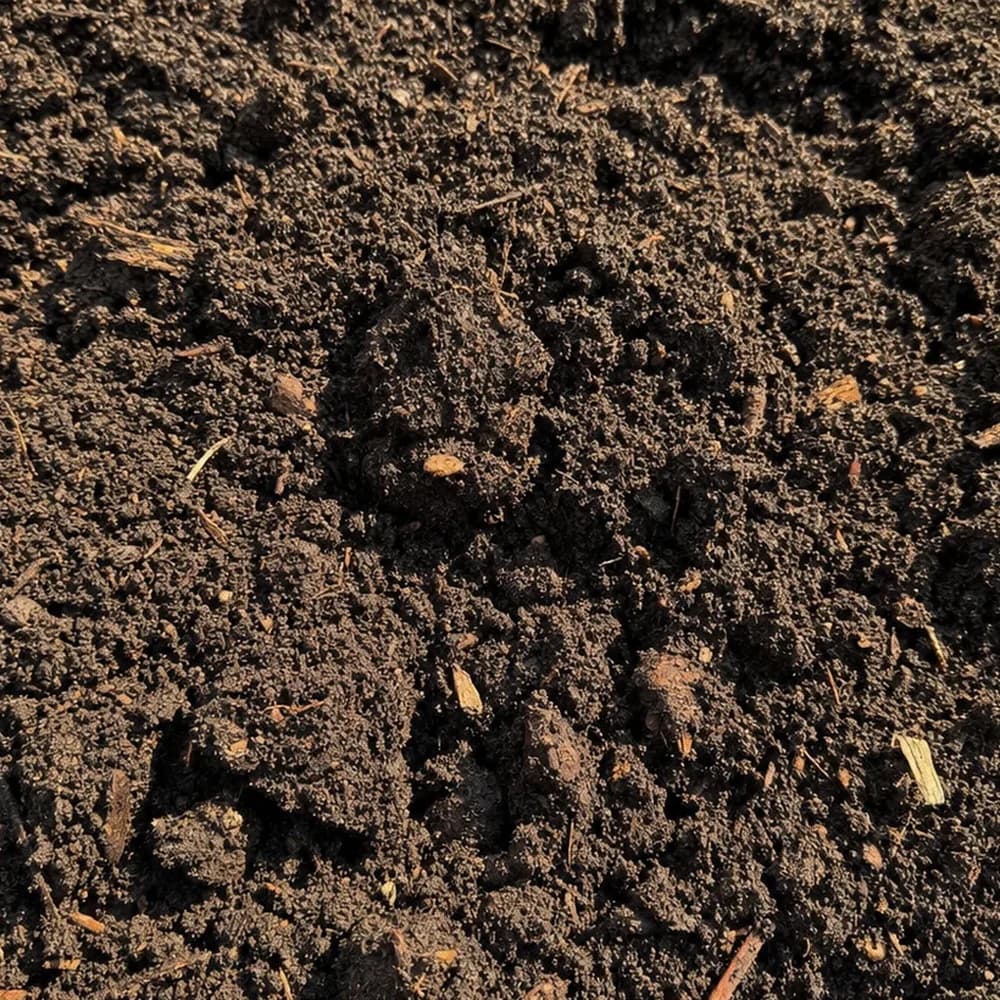
- Size: Consistent, medium-sized shreds
- Type: Shredded hardwood
- Color: Natural brown
- Typical depth: 2-4 inch layer
From $284 for 1 yard, delivery included (larger loads cost significantly less per yard)
Free delivery included
Free delivery anywhere in New York
Pick a delivery date
Weekday delivery, earliest Oct 30
“Grabbed shredded mulch from these guys, they kept me updated the whole time and I'd definitely order again.”
Debbie T. · Verified Buyer
Get a Free Quote
Fill out the form and our sales team will get back to you within the hour.
Size and Grading
- Size
- Consistent, medium-sized shreds
- Type
- Shredded hardwood
- Color
- Natural brown
- Typical depth
- 2-4 inch layer
Two different problems turn up in New York planting beds, and one cover answers both. On the stony glacial till upstate and the silty valley floors, the ground freezes and thaws repeatedly through the winter, and every cycle lifts shallow-rooted perennials a little further out of the soil until their roots sit in the open air by March. On Long Island's sandy outwash, the ground never holds a freeze for long, but it lets go of water so fast that a bed bakes dry within days of a July rain. Shredded Mulch covers both: shredded hardwood in a natural brown, laid 2 to 4 inches deep, moderating the swings at the root zone and slowing what the sun and wind take out of the soil.
The shreds are what makes it behave. Cut fibers knit into a mat that stays put, where bark nuggets float off in a downpour and wash to the low end of the bed.
What a brown hardwood layer does on stony till and on sand
Over till and valley clay, the layer works as insulation. Soil under 3 inches of mulch changes temperature slowly, so the freeze and thaw cycle that heaves plants out of a bare bed is blunted. The same layer keeps a spring rain from hammering bare soil into a crust.
Over sand, it works as a lid. Water still drains straight down, but far less evaporates from the surface, and the bed stays workable into a dry August rather than turning to dust.
As the hardwood breaks down it adds organic material to the soil beneath it, which is why the layer thins each year and why a bed mulched for several seasons has better soil under it than it started with. That is also why it is a renewing cover rather than a permanent one. Where you want a surface that stays as it is, the stone products are the alternative: River Rock for beds, or 3/8" Natural Pea Gravel where the finish is finer.
Spreading shredded mulch three inches deep, and back from the stems
Weed the bed first. Mulch laid over established weeds suppresses very little and just hides them for a month.
Spread it 2 to 4 inches deep, taking the deeper end on open beds and the shallower on tight plantings. Then pull it back from the stems and trunks so there is bare soil and air at the base of each plant, and never pile it against the bark of a tree. Around a tree, a flat ring taken out to the drip line does far more good than a cone heaped up the trunk.
Rake it level rather than leaving wheelbarrow-shaped heaps. A consistent depth is what gives consistent weed suppression, and the thin patches are where you will be weeding in June.
Under a garage pad and below a downspout, bark is the wrong cover
Two jobs on this list belong to other materials.
A shed or garage pad base needs a compacted mineral layer that carries weight and drains: Item 4 or crusher run, with #57 Stone where an open pad is wanted. Organic material under a pad rots, compresses and takes the level with it.
A downspout splash area takes concentrated roof water several times a week. Mulch floats, so it ends up spread across the lawn after every storm. Give that spot washed stone, and where the splash sits against a foundation, move the water away from the wall before decorating the spot at all.
A rock garden or xeriscape bed is the in-between case. The visible surface there is stone, chosen for the look and because it lasts. Mulch has a place only in the planting pockets themselves, where a couple of inches around each plant holds moisture while it establishes. Do not spread it across the whole bed and then cover it with stone, because the two layers mix within a year.
Topping up after the melt, and what the layer looks like in year two
Expect a mulched bed to look thin by the end of the first winter. Some of the depth has broken down into the soil, some was carried off by melt water, and plow spray along a driveway edge takes its share.
Most beds want a top-up rather than a rebuild: an inch or so over the existing layer each spring keeps the depth right. Rebuilding from bare soil every year piles up more than plants want. If the surface has crusted or matted so water runs off it, break it up with a fork before adding anything.
Measuring a front foundation planting and two maple rings
Hypothetical dimensions, worked through.
Foundation planting, 42 ft long by 5 ft deep, 3 in of mulch
- 42 x 5 = 210 sq ft
- 210 x 3 / 12 = 52.5 cu ft
- 52.5 / 27 = 1.9 cu yd
Two maple rings, 6 ft across each, 3 in deep
- One ring is 3.14 x 3 x 3 = 28.3 sq ft, so two are 56.6 sq ft
- 56.6 x 3 / 12 = 14.2 cu ft
- 14.2 / 27 = 0.5 cu yd
That is about 2.4 cubic yards. This is by far the lightest material on the site: roughly 600 lb per cubic yard, or around 0.30 tons per yard, so 2.4 yards is only about 0.7 of a ton. Order it and think about it by the yard, because the tonnage figure makes a large pile sound like a small one.
The mulch calculator will do the arithmetic for a bed with curves in it. Once the yardage is settled, pick a quantity and a delivery date on the Shredded Mulch page. Delivery is arranged at checkout by ZIP code, and although a mulch pile is light, it is bulky, so choose a drop spot with room and a wheelbarrow route to the beds.
Quickly Calculate How Much You Need
Material: Shredded Mulch
How to Measure
Measure the length and width of your project area in feet
Decide on depth in inches (2" for landscaping, 4" for driveways)
Enter the values above and we'll calculate the tonnage you need
Need help figuring out the right amount? We can help!
Call or text us at (516) 914-4265 and we'll help you calculate the right quantity for your project.
Not sure how much you need? The Mulch Calculator has depth guides, coverage charts and worked examples for this material.
Frequently Asked Questions About Shredded Mulch
Customer Reviews
Ordered shredded mulch from this company, ordering was no fuss and the pricing felt fair for what I got.
Christine M. · Albany, NY · Verified Buyer
Grabbed shredded mulch from these guys, they kept me updated the whole time and I'd definitely order again.
Debbie T. · Syracuse, NY · Verified Buyer
Decided on shredded mulch from New York Rock Supply and ordering was quick. Price felt fair for the amount I got, really happy with how it turned out.
Mike F. · Rochester, NY · Verified Buyer
Got shredded mulch from this company and it showed up on time with free delivery, which was awesome. I'm really happy with it and would definitely order again or recommend them.
Stephanie V. · Albany, NY · Verified Buyer
Shredded Mulch has 4 verified customer reviews with an average rating of 5 out of 5.