Dirt Calculator: Sizing a Fill Load Between Thaw and Freeze-Up
Enter your project dimensions
Grading work has a window, and in most of New York it is narrower than people plan for. Clay and silt left by old glacial lakes on the St. Lawrence and Champlain plains, on the lake plain west of Syracuse and along the valley floors drains slowly, so fill spread on saturated ground in March smears instead of packing. At the other end, frozen ground in November stops the job outright. Between those two, the aim is to place fill, compact it and let it take a rain or two before winter. The dirt calculator is one stage in that, and it comes after the measuring, not before.
Reading a settled corner before you order anything
Take a hypothetical case and follow it through: a lawn corner 22 by 16 ft that has dropped over the years and now holds water for a day after every storm.
A hollow is not a box. Lay a straight board or a string line across it at the finished grade you want, then measure down to the ground at eight or ten points spread across the dip, not just at the deepest place. Average those readings. Say they run from 2 inches at the rim to 8 in the middle and average out at 5. That average is the depth to use.
Strip any sod first, or it rots under the fill and the corner settles a second time. Note the length and width in feet at the finished edge of the patch, not at the bottom of the dip.
Totaling a hollow and a trench in one pass
Choose rectangle, or circle if you are filling something round, such as the dished ring an above-ground pool leaves behind. Multiple areas lets you total up to five separate pieces in one calculation, which is how a low corner, a wheel rut and a trench line get added together. Lengths, widths and diameters go in feet; depth goes in inches, between 0.25 and 24. Anything deeper than two feet, which describes most old stump holes and plenty of foundation backfill, goes in as two entries rather than one: split the depth in half, run the footprint twice, and add the yardages. Pick the material so the ton figure is right, leave the 10% extra for compaction and spillage ticked, and press calculate. Cubic yards, tons and cubic feet come back together, with an option to have the estimate emailed.
For the corner:
- 22 x 16 = 352 sq ft
- 352 x 5 / 12 = 146.67 cu ft
- 146.67 / 27 = 5.43 cu yd
- 5.43 x 1.20 = 6.52 tons
- with the 10% box: 5.97 cu yd, 7.17 tons
A round example for comparison, also hypothetical: a 24 ft circle left behind by a pool, averaging 7 inches down. The circle area is 452 sq ft, 452 x 7 / 12 = 264 cu ft, 264 / 27 = 9.78 cu yd, and at 1.20 that is 11.7 tons.
Placing it in lifts rather than one heap
Fill goes down in 6 to 8 inch lifts, each one compacted or soaked and left to settle before the next. Loose fill dropped in one go keeps sinking for a year, and on the heavy clay and silt soils of the valley floors and lake plains it can hold water between the layers while it does. For a lawn patch with no plate compactor to hand, soak each lift and finish about half an inch proud of the surrounding grass so it settles level.
Keep wood, roots and sod out of it. Buried organic material rots, and the hollow reopens years later.
Stopping the fill short of the surface
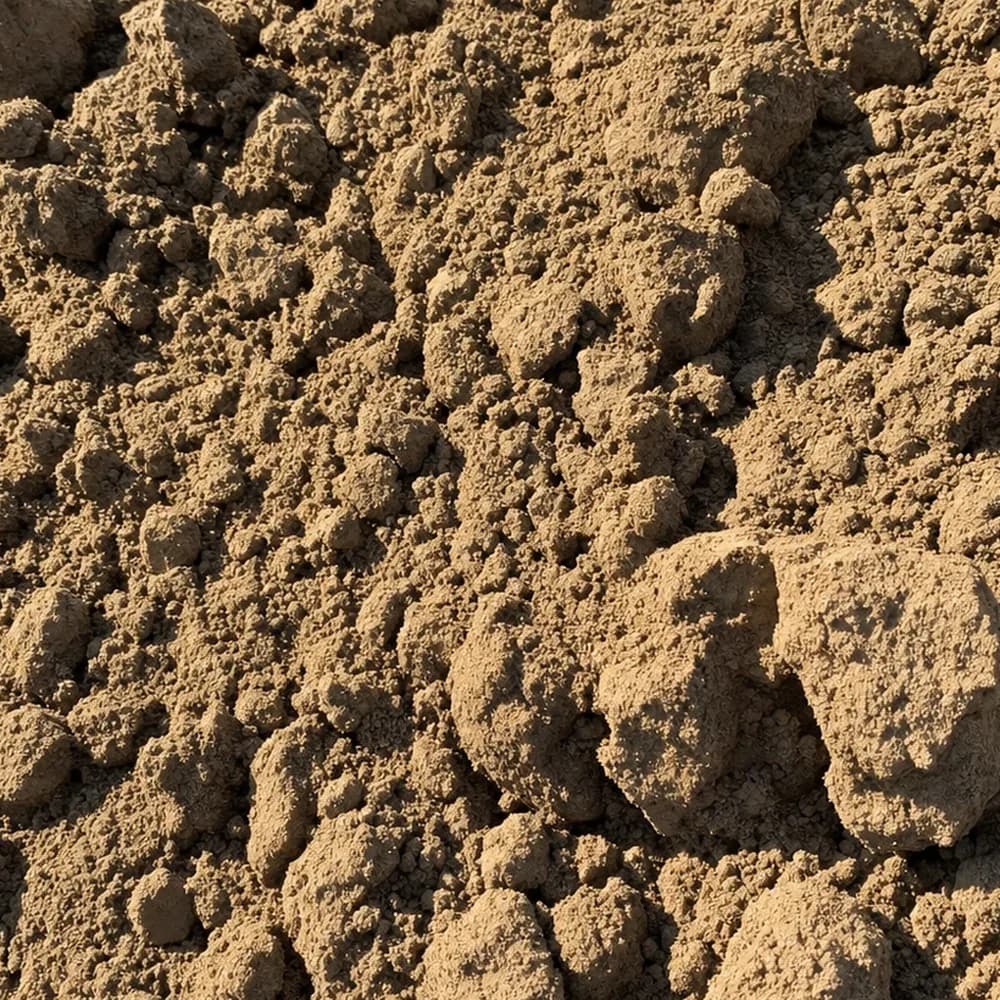
Fill dirt is screened subsoil. It holds a grade and carries weight, and almost nothing will grow in it. So finish the structural work 4 to 6 inches below your final grade and cap it with something a root can live in.
Which tool sizes that cap depends on what goes on top. For lawn, seed or sod, use the topsoil calculator, which runs screened topsoil at about 2,200 lb per cubic yard. For a planting bed or a raised planter, use the soil calculator and the blended garden soil figure of about 2,000 lb. This page and the fill dirt figure of about 2,400 lb are for the layer underneath all of that. Three tools, three weights, three jobs.
What a yard weighs after a wet week
This site publishes dry fill dirt at about 2,400 lb per cubic yard, which is 1.20 tons, and wet fill at up to 3,000 lb, or 1.50 tons. Rain adds weight, not volume, so a soaking does not change the yardage you order. It changes what a wheelbarrow feels like and whether the material will compact at all.
Fill is sold here by the cubic yard, so the yardage is the figure to carry over. Tons are shown because a loaded truck is weighed, and the difference between the dry and wet figures is why a load can arrive heavier than the number on your estimate.
Where six yards of fill can sit
Six yards is a pile a good deal taller than it is wide when it first lands, so choose the drop spot before you order. Firm ground near the work, clear of the septic field and the leach lines, with a straight run in and out for the truck, which is what the driver needs on the day. Delivery is arranged at checkout by ZIP code. Put Fill Dirt in the cart at the yardage the calculator gave you, and add the capping material to the same order so both arrive together. Where the raise is going under a future pad or drive, the crusher run that sits on top of it is a separate order at a separate weight, and a hollow you cannot get an honest depth out of can go through the contact page with your readings.
Common questions
The low spot has already been filled once and only needs bringing up an inch. How do I measure that?
Run a string line at the grade you want and measure down at several points, the same as for a deeper hollow. An inch of average depth over a 20 by 20 ft patch is 400 sq ft at 1 inch, which is 33 cu ft, or 1.2 cubic yards. Thin top-ups are worth calculating rather than eyeballing, because a yard goes further than people expect at that depth.
What happens if the load runs out before the grade is up?
The patch finishes low, and on a lawn that means it will pond again after the first heavy rain. Fill is cheaper to order long than to order twice, so round up to the next whole yard and use the surplus to fatten a bed edge or back up a fence line.
Should I trust the yardage exactly?
Trust the arithmetic, not the depth. Hollows are uneven, sod and topsoil have to come off first, and fill loses 10 to 15 percent of its loose depth as it settles and compacts. Average your readings, keep the 10% ticked, and order to the next round number above the result.
Fill dirt is sold by the yard. Which listing do I put the figure into?
The fill dirt page, by the cubic yard. If the same job also needs a growing layer over the top, size that separately on the topsoil or soil calculator and put both on one order.
How much room does a fill pile need?
Reckon on a parking-space footprint for a few yards and more for a bigger load, on ground firm enough to wheelbarrow across. Keep it off a new apron, tarp underneath if the surface matters, and drop it uphill of the work so you are wheeling down rather than up.
Related calculators
Cheap by the yard, free to your gate.
Screened fill dirt for grading and backfill, delivered across New York.