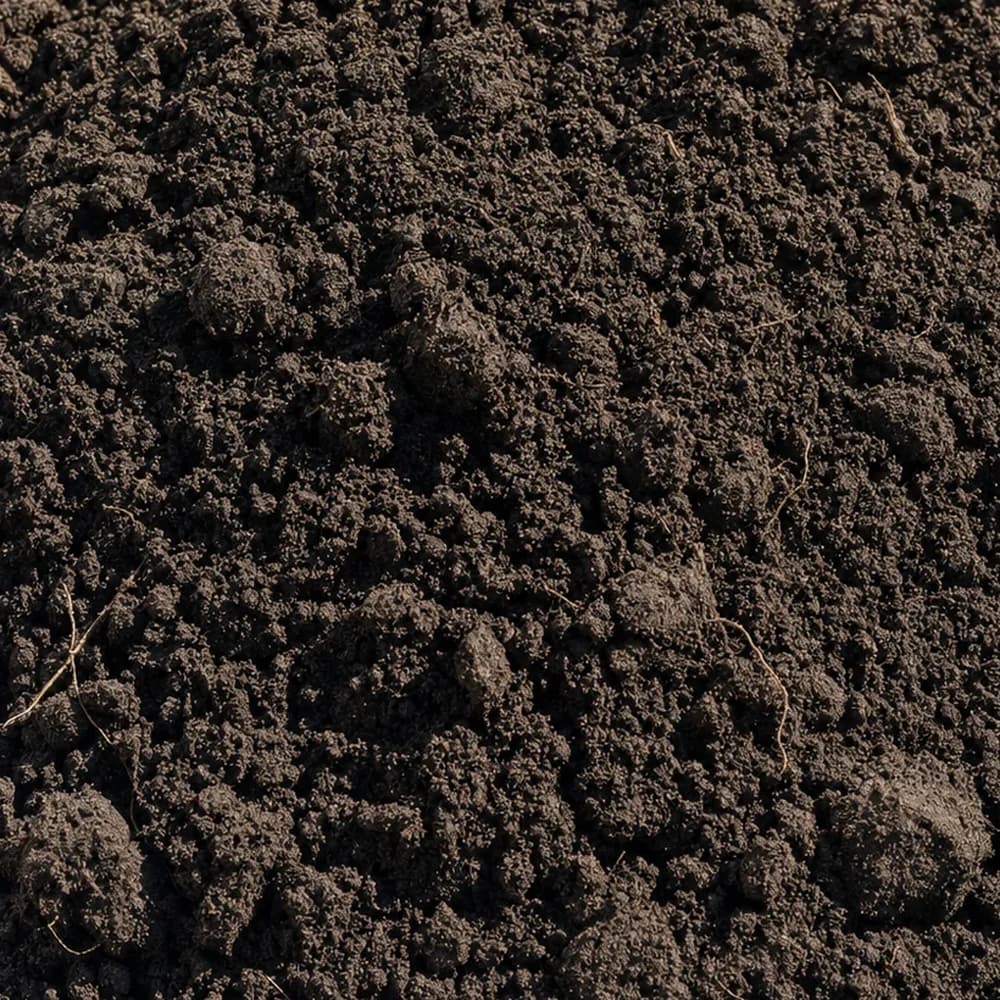
Topsoil Calculator: Pick the Depth, Then the Yardage
Enter your project dimensions
A stripped lot in the Mohawk Valley that has been driven over all summer and an established lawn over Long Island sand both need soil, and they need it at depths eight times apart. That single decision moves a topsoil order far more than the size of the lawn does, so make it before you open the topsoil calculator rather than after.
Ground under the grass sets the inches you type
Across most of upstate the subsoil is stony glacial till, and on the uplands of the Southern Tier and the Finger Lakes hills there is often a dense layer below that holds water close to the surface. Spread four inches of soil straight onto ground like that, sealed by machine traffic, and it drains the way a plugged sink does. Loosen the top inch of the subgrade first so the two layers knit and roots can cross the join.
On the lake plains and the flat clay ground of the St. Lawrence and Champlain valleys the same rule applies with more force, because water already sits there after a thaw. On the sandy outwash soils of Long Island the problem runs the other way: water leaves before roots get much use of it, so a seeding depth on the generous side is doing real work rather than filling a hole.
Timing matters as much as depth. Ground that is still soft after the thaw compacts under a wheelbarrow wheel and stays printed, and frozen ground in late fall ends the season for this work.
Depth by job, and the inch that smothers turf
| The job | Depth to enter | Note |
|---|---|---|
| Topdressing an established lawn | 1/4 to 1/2 in | Rake in until the grass tips still show |
| Preparing to overseed | 1/2 to 1 in | Enough to hold seed, not enough to bury turf |
| New lawn, seed or sod | 4 to 6 in | Over a loosened subgrade |
| Flower bed, blended into what is there | 6 in | Beds of blend are sized on the soil calculator |
| Finish grade over fresh fill | 4 in | Bring the level up with Fill Dirt first |
Anything more than about an inch over existing turf smothers it, and buried sod decays unevenly and leaves the lawn lumpy for a season. Above that, strip or kill the grass first.
Running a lawn and a bed through in one calculation
Rectangle handles a lawn panel or a strip. Circle takes a diameter, useful for an island bed or a round patch. Multiple areas totals up to five pieces at once, so a front lawn, a side strip and a bed by the drive go in together.
Enter the dimensions in feet and the depth in inches, anywhere from 0.25 to 24, which is why a half inch topdressing is entered as 0.5 rather than rounded up to 1. Choose the material so the weight is right, and the 5 percent tick box adds a margin for spillage and the low corners you find while raking. Cubic yards, tons and cubic feet come back together, and the estimate can be emailed.
Cubic yards on the order, 2,200 pounds on the truck
Screened topsoil is published here at about 2,200 lb per cubic yard, which is 1.10 tons. It sells by the cubic yard, so the yardage is the number for the quantity box; the tonnage tells you what is arriving on the truck, which is worth knowing when it is landing on a driveway.
Rain changes the weight and not the volume. A soaked yard shovels considerably heavier without covering a square foot more, so wet weather affects the work rather than the order.
One cubic yard covers 648 square feet at a half inch topdressing, 108 square feet at 3 inches, 81 at 4 and 54 at 6. The check by hand is the same one line every time: area in square feet, times depth in inches, divided by 12, divided by 27, then times 1.10 if you want tons.
Half an inch across 4,000 square feet, four inches across a bare lot
Three hypothetical jobs, with the arithmetic shown.
A new lawn, 1,600 sq ft at 4 inches. 1,600 x 4 / 12 = 533.33 cubic feet. 533.33 / 27 = 19.75 cubic yards, which at 1.10 is 21.73 tons. Break up the subgrade first, then keep the finished grade falling away from the house, roughly 6 inches over the first 10 feet.
A topdressing pass, 4,000 sq ft at three eighths of an inch. 4,000 x 0.375 / 12 = 125 cubic feet. 125 / 27 = 4.63 cubic yards, or 5.09 tons. Twice the area of the lawn above and under a quarter of the material, which is the clearest illustration of how much depth decides here.
Finish grade over new fill, a 15 by 30 ft strip at 4 inches. 450 x 4 / 12 = 150 cubic feet. 150 / 27 = 5.56 cubic yards, or 6.11 tons. Bring the level up with fill first and keep the topsoil for the top few inches where roots live, sizing the fill on the dirt calculator.
Ordering a yard long, and spreading it the week it lands
Round up to the next whole yard on any lawn job. Edges, low corners and the settling that follows the first heavy rain all take more than the flat calculation suggests, and a lawn finished half an inch shy in one corner is where the first bare patch appears. Firm the soil by treading or rolling lightly rather than stamping it; a footprint that sinks about half an inch is about right.
Have it delivered the week you plan to spread. A pile left standing goes sour and airless, and the grass under it is gone in days. Tip it on the drive on a tarp if you can, close to the work and clear of the route you will be wheelbarrowing. Delivery is arranged at checkout by ZIP code, and the driver needs clear access to a firm spot. Put the yardage against Top Soil, pick a date, and order any fill or seed bed material on the same delivery.
Common questions
Do I enter the depth loose or after it has settled?
Enter the finished depth you want once it is raked and firmed. Screened topsoil does not compact the way a stone base does, but it does settle into a loosened subgrade and it does lose a little as it is watered in. The 5 percent box covers that on a small job; on a full lawn, round the yardage up instead.
The patch is round rather than square. What do I put in?
Use circle mode and measure the full width across the middle, not from the center out. A 12 ft circle is 113.10 square feet, so at 4 inches that is 113.10 x 4 / 12 = 37.70 cubic feet, or 1.40 cubic yards. For a kidney shape, split it into two circles or a circle and a rectangle and enter them as separate areas.
Which listing do I use once I have the number, and is it the same as garden soil?
The Top Soil listing, ordered by the cubic yard. It is screened natural soil, and it is the right material for lawns, seeding and grading. Beds and planters want Garden Soil instead, the compost blend, which is a different product with a different weight, sized on the soil calculator. If a job needs both, order them together and keep them in separate piles.
Twenty yards is a lot of soil. Where should it go?
Not on the lawn you are about to seed, and not where it blocks the route to the back gate. Pick firm ground close to the work with a straight approach for the truck, put a tarp down if the surface matters, and keep the pile compact rather than spread, because a compact heap sheds rain instead of soaking it up.
Topsoil sells by the yard, so why does the estimate show tons?
Because the two numbers answer different questions. Yards are what you buy and what the coverage figures are built on. Tons describe the weight arriving, which matters for where the pile sits and how much of it a wheelbarrow will take. At 1.10 tons a yard the conversion is easy in either direction.
Related calculators
Lawn math done? Soil's on us to deliver.
Screened topsoil by the cubic yard, free delivery across New York.