Railroad Ballast: Stone for New York Ground That Keeps Sinking
New York freeze-thaw and wet ground call for Railroad Ballast beneath load-bearing work areas where an open stone base can drain.
- Size: Roughly 1 inch to 2.5 inches
- Grading: Graded to interlock under load while draining freely
- Type: Large angular crushed stone
From $425 for 1 ton, delivery included (larger loads cost significantly less per ton)
Free delivery included
Free delivery anywhere in New York
Pick a delivery date
Weekday delivery, earliest Oct 30
“Had railroad ballast delivered and it was great quality. The team sent a friendly driver who was careful about placement, which I really appreciated.”
Megan P. · Verified Buyer
Get a Free Quote
Fill out the form and our sales team will get back to you within the hour.
Size and Grading
- Size
- Roughly 1 inch to 2.5 inches
- Grading
- Graded to interlock under load while draining freely
- Type
- Large angular crushed stone
By its second spring, the equipment pad behind a Mohawk Valley shop has usually told its owner what it thinks of a thin stone layer over wet till. Ruts where the loader turns, a dip under the trailer tongue, water standing where the surface used to crown. Most railroad ballast orders are the second attempt at that pad rather than the first, and the reason the second attempt works is that the material is the wrong shape for looking neat and exactly the right shape for holding weight on ground that will not stay firm.
One-hand stone with gaps you can see through
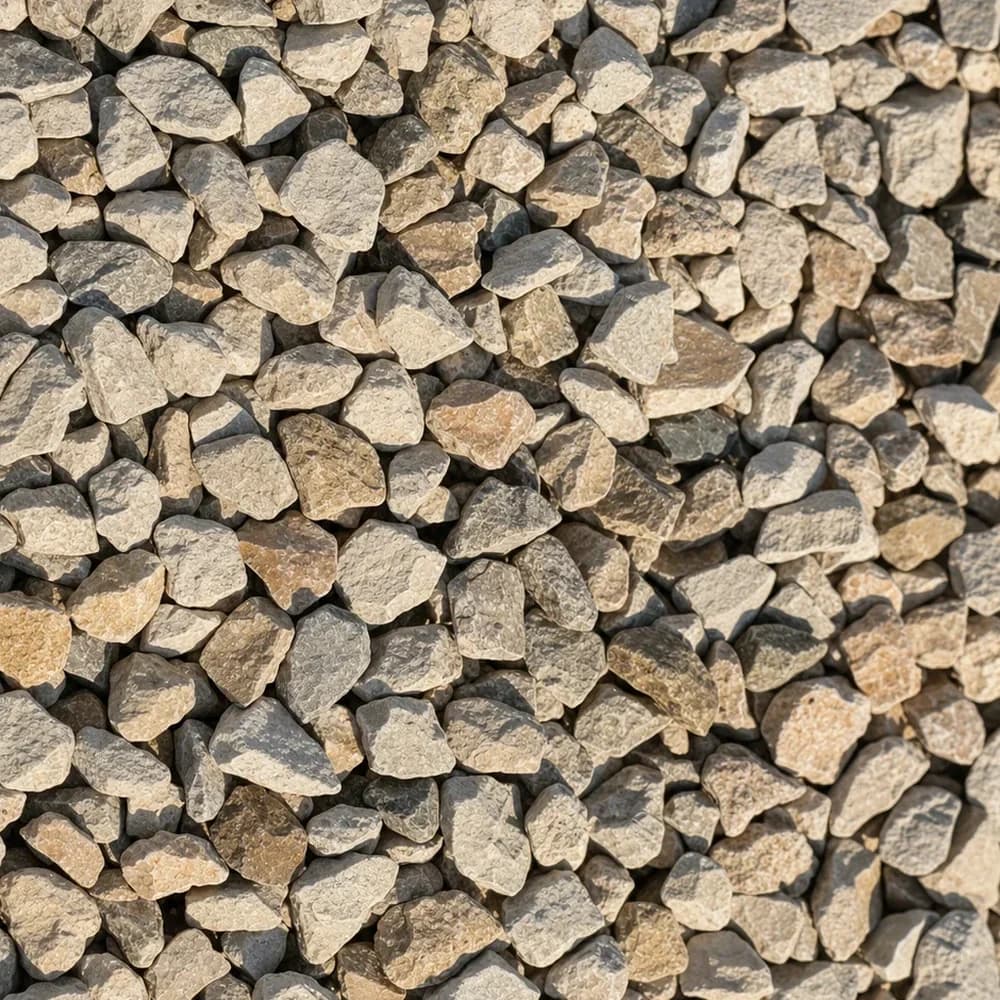
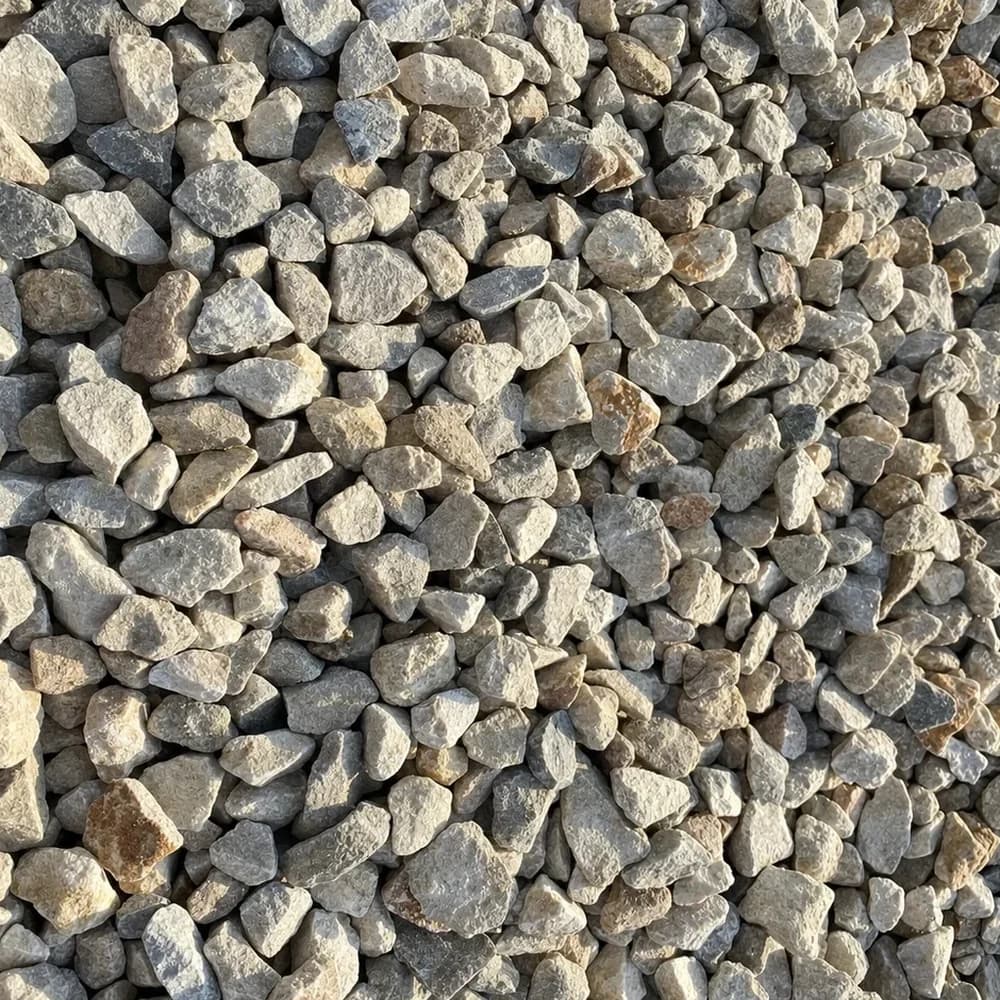
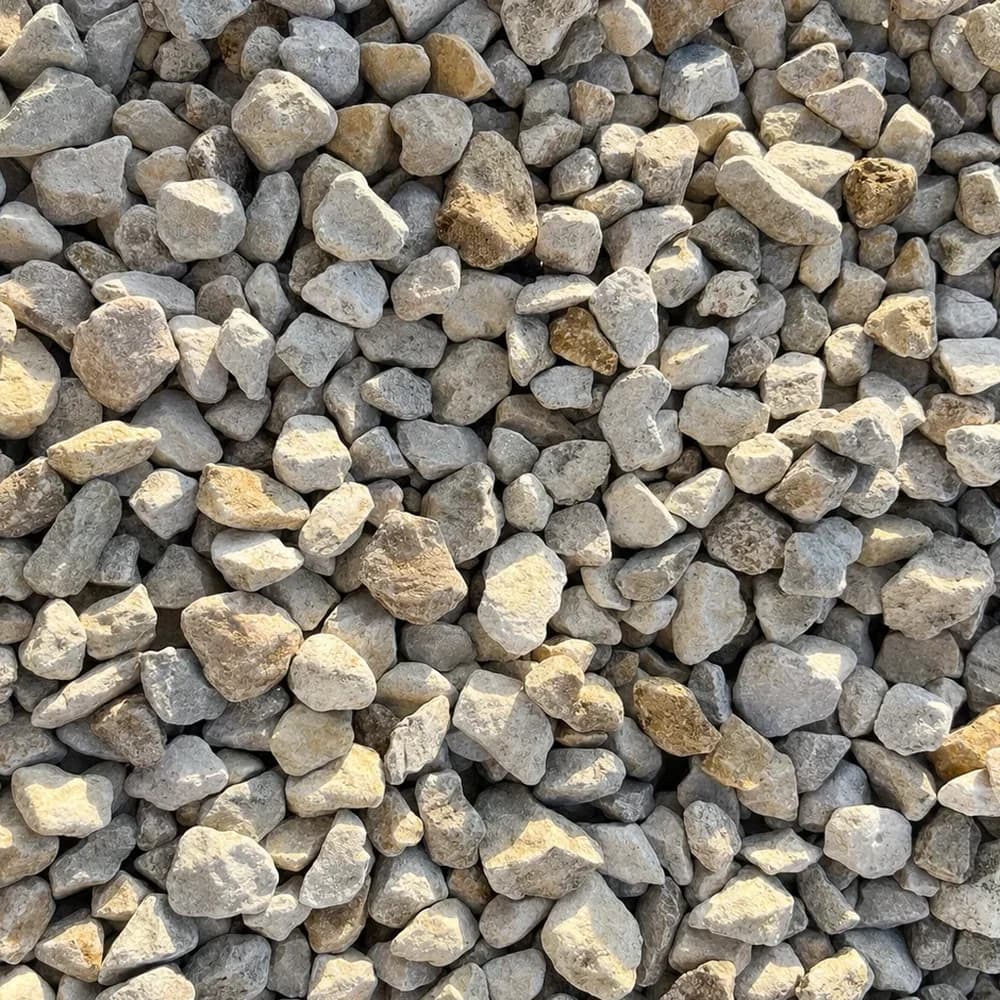
Ballast comes off the truck as large angular crushed stone, roughly an inch to two and a half inches, graded so the pieces interlock under load while water still runs through the layer. You handle it a piece at a time. A shovel skitters across the top of the pile rather than biting into it, and a rake is useless.
Look into the heap and the gaps are the point. They stay open because there are no fines to fill them, and open gaps mean a tire load presses stone against stone instead of pressing water into mud. Broken faces lock against each other, so a layer that has been worked over a few times by a machine holds its shape without any binding material at all.
What it is not is a finish. Nobody walks comfortably on it, nothing sits flat on it, and it will never close up into a smooth surface no matter how many passes it gets.
Railroad ballast under equipment pads, site roads and a boat pad
The jobs that suit it share one feature: something heavy stands or moves over ground that drains badly.
A machinery or container platform is the clearest case. Point loads from outriggers, jacks and stacked equipment want a layer that spreads weight downward rather than squeezing sideways into soft subgrade.
A site access route is the second. On the bouldery, poorly drained till of Tug Hill, or across the flat clay plains inland from Lake Ontario, a working road built from anything finer turns into a trench in one wet week. Ballast under traffic stays a road.
An RV or boat parking pad is the domestic version of the same problem. A loaded trailer parks in the same spot for months, the tongue jack concentrates weight into a small footprint, and the ground beneath is wet for a good part of the year. Ballast as the lower layer, with a finer material over it, gives that pad something to stand on.
Rail track itself is the original use, and broad drainage areas where water has to cross under load round out the list.
Too coarse to rake: tomato frames and the swing set
Two jobs get asked about and neither of them fits.
Raised vegetable beds want a growing medium. Ballast in a bed is a drainage layer you cannot dig through, its voids swallow soil until the bed level drops, and the stone works its way up every time you turn the ground. Garden Soil is the material for what grows and fill dirt for bringing the level up beneath it.
A playground surface is the second, and the mismatch is worse. Play surfacing needs to be soft, rounded and rakeable. This stone is heavy, sharp at every edge and impossible to level by hand. Shredded mulch or a rounded stone belongs under a swing set.
The general rule holds for anything decorative. A border, a bed or a path built from ballast looks like a quarry floor and stays awkward underfoot for as long as it is there.
Depth over till that pumps under a loaded trailer
Depth here is about bridging, not compaction. The layer has to be thick enough that the load spreads before it reaches the soft material below, which means a wetter, weaker subgrade needs more stone, not better stone.
On ground that holds a boot print without swallowing it, six inches under a pad is a reasonable starting point. On till or clay that pumps water to the surface when you walk on it, eight inches or more, and separation fabric underneath in every case where fines can migrate up into the voids. That fabric is the difference between a layer that still drains in five years and one that has quietly turned into a wet stone-and-mud sandwich.
Place it and key it in with the bucket or a few machine passes. A plate compactor has nothing to work with here, so do not plan on one.
Tons for a 14 by 40 boat pad and a 60 foot access strip
Hypothetical areas, with the arithmetic shown.
Boat and trailer pad, 14 by 40 ft, 8 in
- 14 x 40 = 560 sq ft
- 560 x 8 / 12 = 373.3 cu ft
- 373.3 / 27 = 13.83 cu yd
Access strip to the pad, 12 by 60 ft, 6 in
- 12 x 60 = 720 sq ft
- 720 x 6 / 12 = 360 cu ft
- 360 / 27 = 13.33 cu yd
That is 27.16 cubic yards between them. On this site's published weights the #4 and ballast family runs about 2,900 pounds per cubic yard, near 1.45 tons per yard, so the order is close to 39.4 tons. Round to 40 and expect some of it to disappear into the subgrade on the soft end. The weight is approximate, and the stone calculator will run the same areas if you would rather check the figure.
What goes over ballast when a smoother top is wanted
Very little stops at ballast. The usual build is this stone as the lower course, then a compacting layer of Item 4 over it, then whatever surface the job needs. That sequence gives you drainage at the bottom, a layer that locks in the middle and something you can walk on at the top.
Where the job is armoring rather than bearing, ballast is not the material at all and RipRap is. Where the need is drainage under a lighter load, #4 Crushed Stone covers much of the same ground with a slightly easier material to handle.
To order, set a tonnage and a delivery date on the product page, or send the pad dimensions through the contact page first. Delivery is arranged at checkout from your ZIP code, and a heavy load needs a clear route in and firm ground to tip on.
Quickly Calculate How Much You Need
Material: Railroad Ballast
How to Measure
Measure the length and width of your project area in feet
Decide on depth in inches (2" for landscaping, 4" for driveways)
Enter the values above and we'll calculate the tonnage you need
Need help figuring out the right amount? We can help!
Call or text us at (516) 914-4265 and we'll help you calculate the right quantity for your project.
Not sure how much you need? The Stone Calculator has depth guides, coverage charts and worked examples for this material.
Frequently Asked Questions About Railroad Ballast
Customer Reviews
Ordered railroad ballast from this company and the free delivery was a nice bonus. Driver was friendly and careful about where he placed it, really happy with the whole thing.
Eric V. · Syracuse, NY · Verified Buyer
Locks together well
I used it under a utility path where I wanted a heavy, angular material. It locked together well. It was a practical choice for the job at my Yonkers, NY home.
Logan H. · Syracuse, NY · Verified Buyer
Grabbed railroad ballast from this company, delivery showed up the day they promised and the driver was friendly and careful about where he placed it.
Bill A. · Albany, NY · Verified Buyer
Had railroad ballast delivered and it was great quality. The team sent a friendly driver who was careful about placement, which I really appreciated.
Megan P. · Yonkers, NY · Verified Buyer
Ordered railroad ballast from the team and the free delivery made it super easy. Driver was friendly and careful about where he placed it, really happy with the whole thing.
Megan V. · Yonkers, NY · Verified Buyer
Decided on railroad ballast from these guys and it showed up right on time, exactly what I needed. I'd definitely order again and recommend them to anyone needing a solid delivery.
Christine F. · Rochester, NY · Verified Buyer
Railroad Ballast has 6 verified customer reviews with an average rating of 5 out of 5.