Bulk Materials for New York Ground, Sorted by the Job
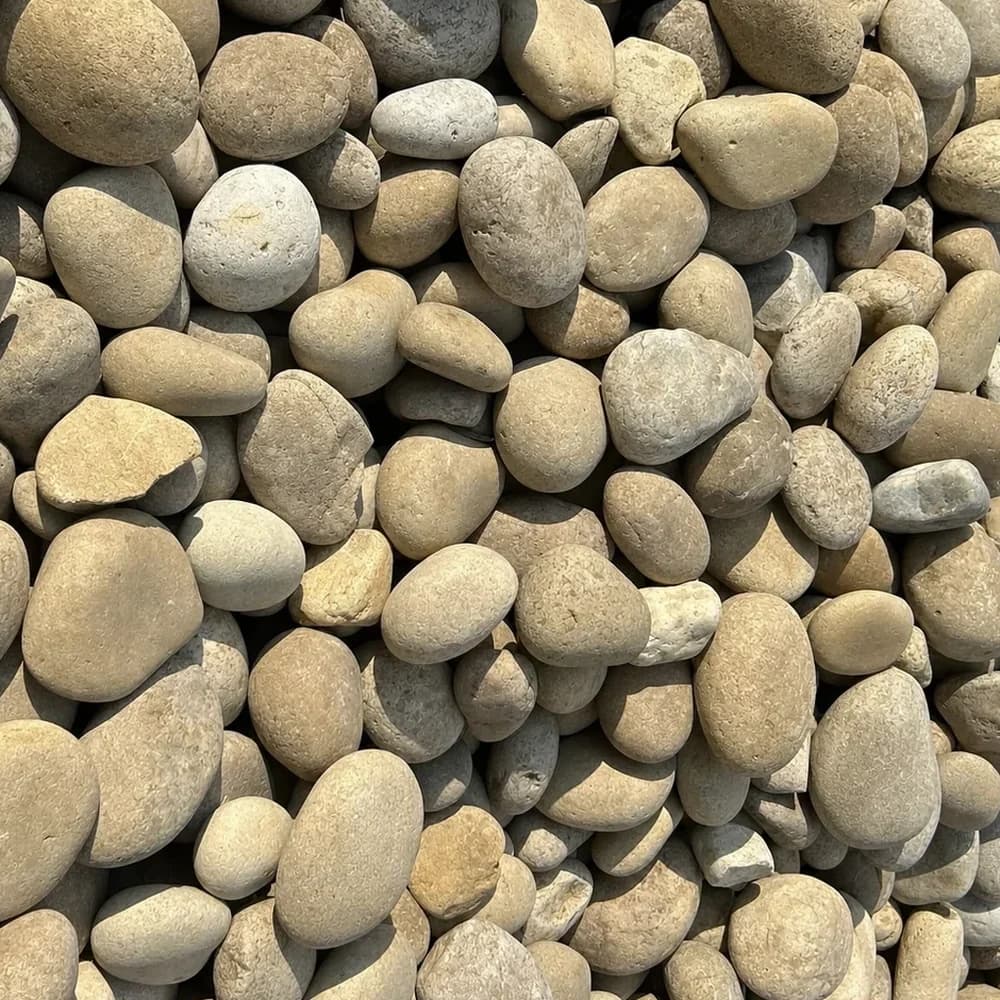
River Rock
River Rock keeps a smooth, rounded look as New York weather changes, bringing earth-tone cover to visible drainage and landscape work. Size: 1 inch to 3 inches. Type: Smooth, naturally rounded stones. Color: Tans, grays, browns and occasional reds.
Free Delivery
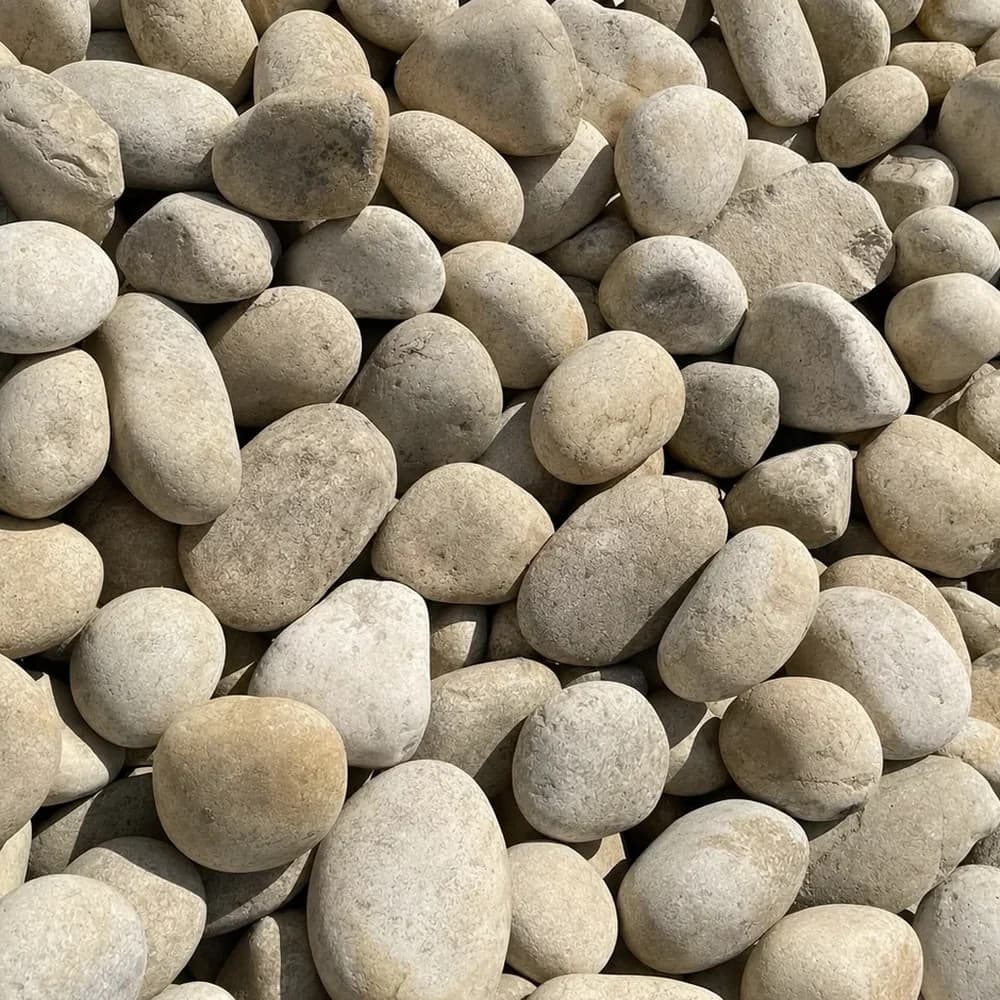
Large River Rock
For New York work near a slope or water's edge, Large River Rock is placed where a landscape feature needs a clear visual anchor. Size: 2 inches to 4 inches. Type: Smooth, naturally rounded stones. Color: Tans, grays and browns.
Free Delivery
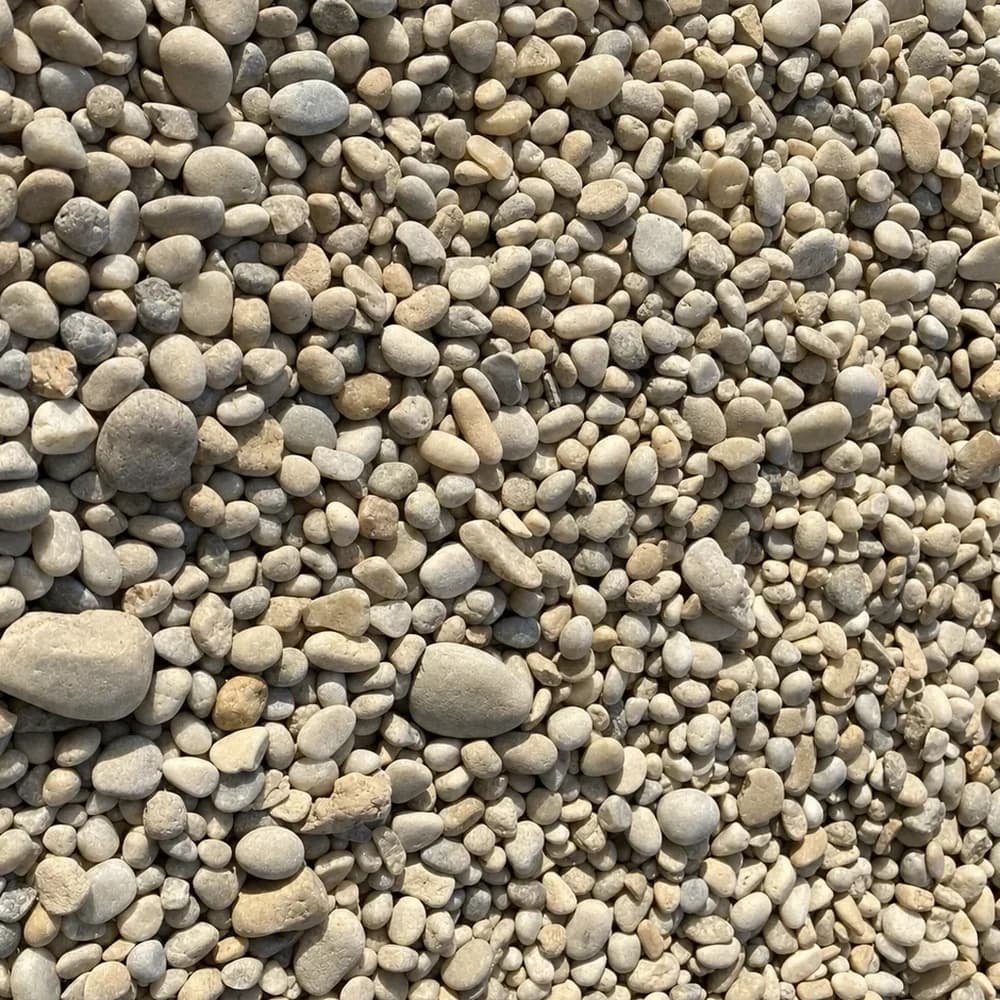
3/8" Natural Pea Gravel
Natural color variation helps 3/8" Natural Pea Gravel keep an easy, informal appearance in New York paths and patio areas while water passes through the surface. Size: Approximately 3/8 inch. Type: Small, smooth, naturally rounded stones. Color: Tans, creams, grays, browns and occasional reds.
Free Delivery
The job that brings most people to this list is a driveway that came out of the winter worse than it went in, and the mistake it usually produces is ordering the top layer without the layer underneath it. What follows is the catalogue arranged around the questions that actually decide an order.
Which of these goes under a New York drive, and which goes on top?
Underneath goes a compacting material, one with its fines left in so a plate compactor can lock it together. Item 4 is the New York name for that stone, a 1 inch minus graded mix of crushed stone, gravel and binding fines. Crusher run is the same idea at 3/4 inch minus, and plenty of yards here sell the two as one material; the larger top size in Item 4 gives a deep lift more to key against. Item 4 is the name a yard and a spec give the material; what the listing states is the size and grading, not a designation held here.
On top goes the layer you look at and drive on: driveway gravel at 3/4 inch for vehicles, walkway gravel at 3/8 inch for paths that still need to drain. Order both and spread them separately. A surface course over bare subgrade will not survive a spring thaw upstate.
Which stone lets snowmelt through instead of holding it?
Washed and open-graded stone, with the fines taken out. 3/4" Crushed Stone and 3/8" Crushed Stone both go into pipe bedding, septic beds and backfill, each listing carrying its own size. #57 stone and #67 stone cover French drains and concrete aggregate, drain rock handles drywells, foundation drains and downspout runs, and #4 crushed stone and railroad ballast take heavy drainage, trench bottoms and construction entrances. #8 and #89 are the small washed sizes for paver joints and tight bedding.
That distinction matters more here than in a dry climate. Flat lake-plain clay inland of Lake Erie and Lake Ontario, and the silt valley floors along the Hudson and the Mohawk, hold water near the surface long after a thaw, and clean stone is the only thing that moves it.
What beds a flagstone patio in the Hudson Valley?
Stone dust is what a New York yard means by screenings, and it is the setting layer under flagstone and pavers, screeded thin over a compacted base. Mason sand is the fine washed sand for mortar, joints and play areas; washed sand is the coarser one for bedding and leveling under slabs. Stone dust packs; sand does not, which is why a patio uses the two for different layers rather than either one alone.
Soil, garden soil or fill dirt for a Suffolk County bed?
Fill dirt builds grade and backfills, screened of roots and rock and low in organic matter. Screened topsoil is the finishing few inches you seed or sod into, which upstate usually means covering stony glacial till and on Long Island means adding body to sand. Garden soil is compost-blended for raised beds and planters. Shredded mulch goes over the top at a couple of inches to hold moisture through summer.
Decorative and shoreline stone
River rock and large river rock are the rounded stones for borders and dry creek beds; natural pea gravel covers paths and play areas at 3/8 inch. Where waves, ice or a rising creek are taking a bank, RipRap is the armor stone, graded here as light, medium or heavy stone fill.
Once the material is settled, put the area and depth into the calculators, then set the quantity, date and delivery ZIP on the product page.
Common questions
Which stone drains and which one compacts?
Fines decide it. Item 4, crusher run and stone dust keep their fines, so they bind under a compactor and make a base. #57, drain rock and the other washed sizes have the fines removed, so water passes straight through. Use the first group where something has to carry load and the second where water has to move.
Are topsoil, garden soil and fill dirt interchangeable?
No. Fill dirt raises grade and carries little organic matter. Screened topsoil is the growing layer. Garden soil is blended with compost for beds and planters. They also weigh differently, at roughly 2,400, 2,200 and 2,000 lb per cubic yard, so swapping one for another changes the tonnage as well as the result.
Can I order from this list for a contractor or a commercial job?
Yes, and more than one product can travel on the same delivery, which is how a base course and a surface course reach a site together. Enter the site ZIP at checkout and mark the drop spot in advance.
How does compaction change the depth I should order for?
The calculators return loose volume. A base that must finish at 4 inches compacted takes more than 4 inches of loose material, so leave the compaction and spillage box ticked, as it is by default (5%, or 10% on the dirt, crusher run, road base and paver base calculators), and add a little more on soft clay or thawing ground where the first lift pushes down into the subgrade.